Friday, September 27, 2019

Math Strategy: Decomposing a Factor - Multiplication

Math Strategy: Decomposing a Factor: Multiplication
Math Strand: Number sense and numeration


Location on the Continuum:


Overview:

“Decomposing a Factor” can be described as a multiplication strategy with legs. 

This strategy builds on the student’s understanding of number and leverages that knowledge to be able to work with numbers with increased flexibility and efficiency. 


We often observe students using Repeated Addition or Skip Counting strategies to solve multiplication problems with smaller numbers or friendly numbers. These strategies support Additive Thinking. 

3 x 7 
7 + 7 + 7
=21
25 x 6
25, 50,75,100,125,150

When students engage with multiplication problems with larger numbers and use these strategies,  we often notice that accuracy and efficiency is negatively impacted.

When a student becomes comfortable with a strategy, it is time to challenge their thinking.

Moving from Additive Thinking to Multiplicative Thinking. 

We are looking for ways to move students when they may be stuck/overly reliant on these strategies. Our challenge is to help shift students from additive thinking into multiplicative thinking.  Introducing and developing the “Decomposing the Factor” will help students to make the shift. 


Additive Thinking
Multiplicative Thinking 
Addition - action of joining or putting things together

Addition - one to one relationship


Multiplication - repeated action, iterative (Repetitive) action

Multiplication - many to one relationship (or one to many)


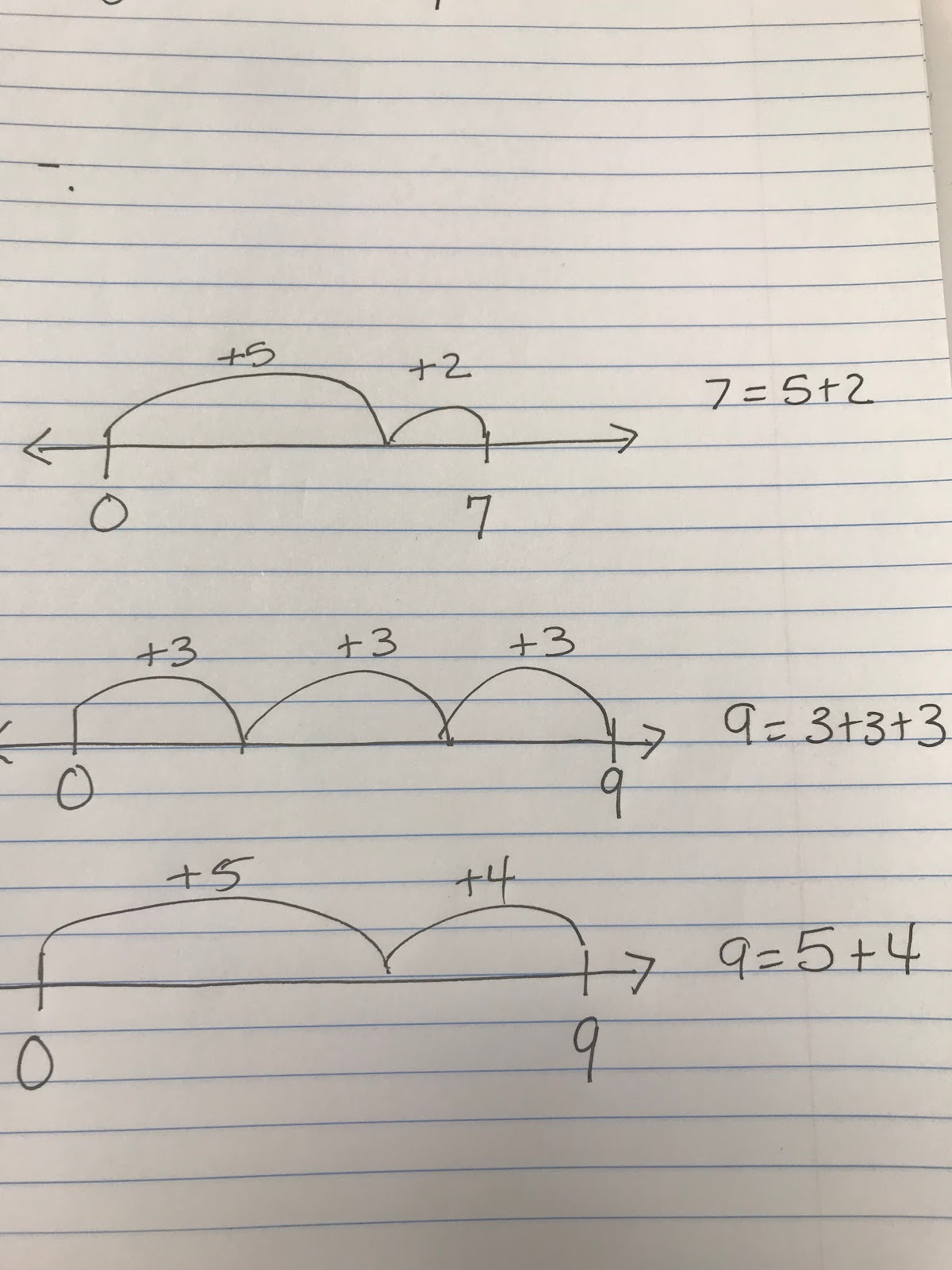
Decomposing a Factor (number) means to break apart the number to uncover the numbers within the factor.

7 = 5 + 2
7 = 3 + 3 +1
9 = 5 + 4
9 = 3 + 3 + 3

Supporting Students: Representing on Number Lines 


A student may decompose connecting to known facts (doubles).

14 = 7+7
22 = 11 + 11
44 = 22 + 22


When working with larger numbers, students may decompose the number by place value.This a specific type of decomposing along place value lines is called SPLITTING. 


14 = 10 + 4
44 = 40 + 4
125 = 100 + 20 +5

Supporting Students: Representing with Base Ten, Place Value Chart


When students use the Decomposing a Factor strategy to solve multiplication problems, how they choose to decompose the number will reflect how they plan to work with the numbers. The goal is for students to be  increasingly flexible, strategic, and efficient as they solve basic fact problems.

Using this strategy also hinges on accurately applying the distributive property when multiplying.

Students need to trust 
That  7 decomposes into a 5 & 2,
 They can work with 5 and 2 separately and then add them back together to get to the solution.

Ontario Math Curriculum Glossary

Distributive Property. 

The property that allows a number in a multiplication expression to be decomposed into two or more numbers; 
for example, 51 x 12 = 51 x 10 + 51 x 2.

 More formally, the distributive property holds that, for three numbers, a, b, and c, 
a x (b + c) = (a x b) + (a x c)

 and a x (b – c) = (a x b) - (a x c);

 for example, 
2 x (4 + 1) = 2 x 4 + 2 x 1 
2 x (4 – 1) = 2 x 4 – 2 x 1. 
Multiplication is said to be distributed over addition and subtraction

Examples


Develop Decomposing Skills: 

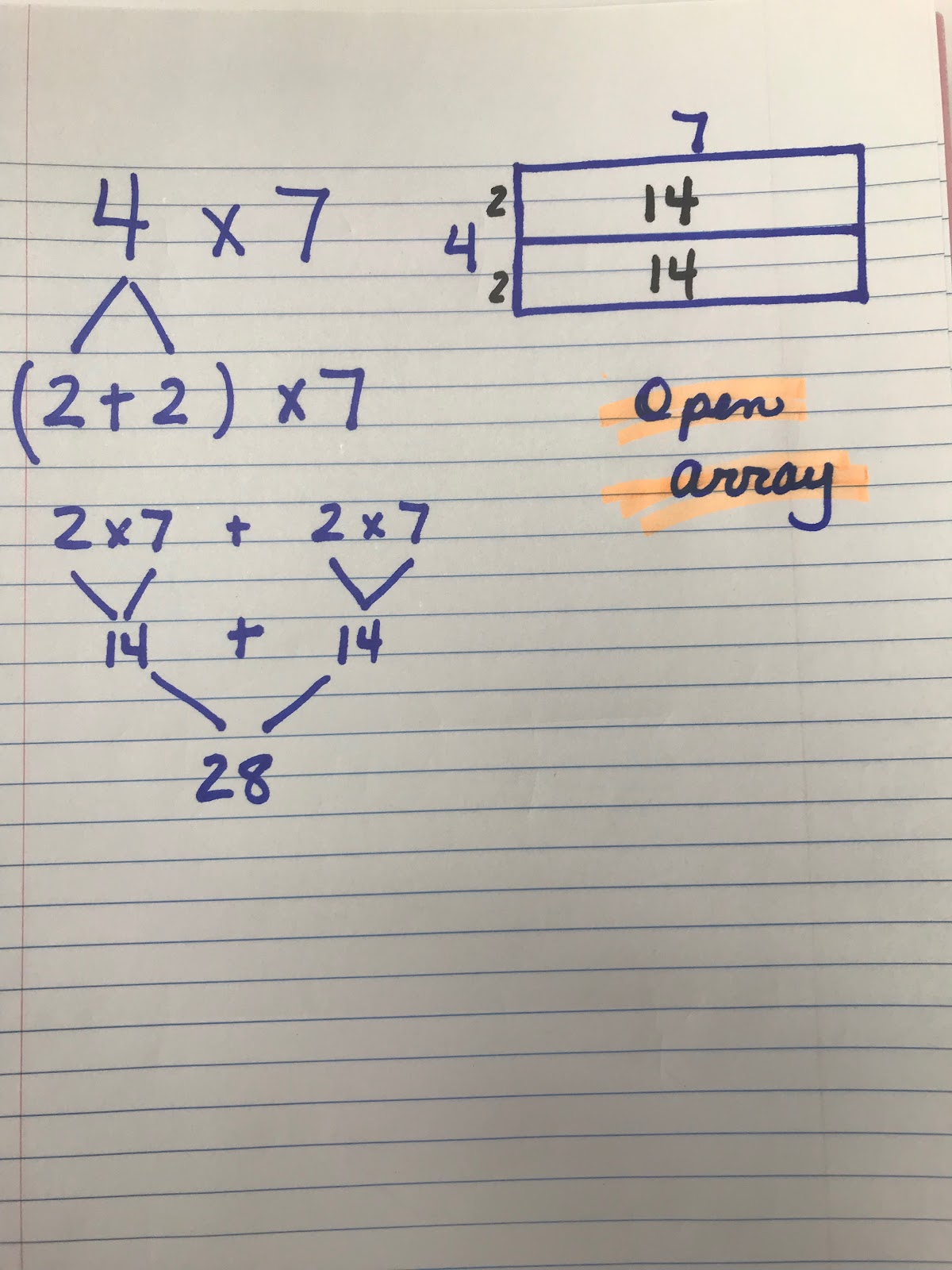
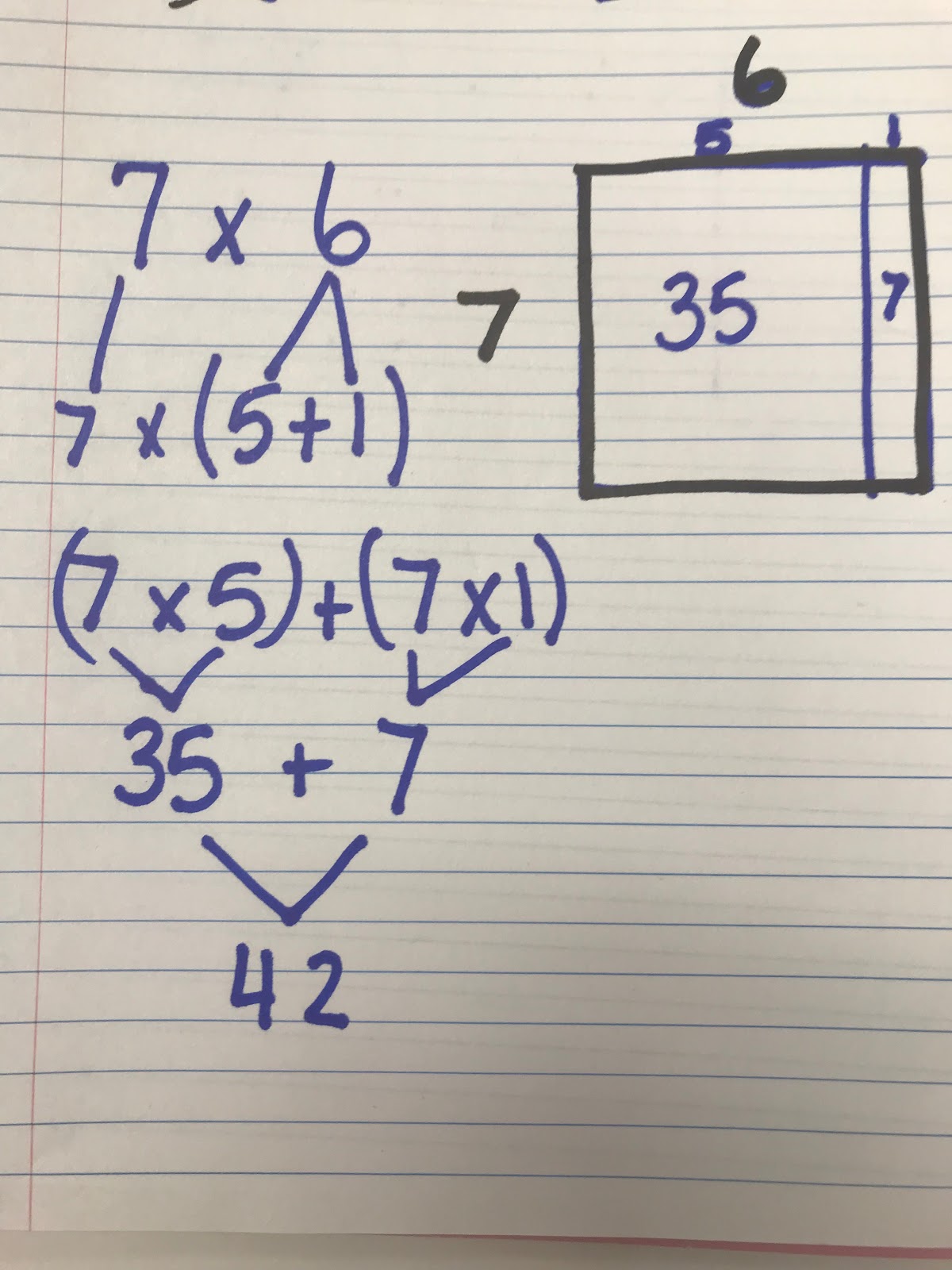
Arrays: The array model is a tool that helps students represent their math thinking.  

Concretely building arrays with manipulatives, pictorially representing closed arrays on grid paper, or drawing open arrays helps students to visualize and verify the decomposed factor and how it can be used to determine the product (answer) The Key Idea of Part Part Whole is developing.

.Encourage students to “Break apart” the array using the decomposed numbers.
 “The numbers within the factor”

Where to Next? 
Strengthen student skills by working with intentional sequences of numbers (a.k.a. strings of numbers).

 Number Talks/Strings/Sequences
Challenge students to explain what numbers they find within a factor. Students can leverage their “Friendly number” knowledge. 


The Decomposing a Factor strategy is a strategy that helps students access other strategies on the continuum. (Using 10X, Using Familiar Facts,)

When students flexibly and efficiently Decompose Factors, they will have the knowledge and skills to develop and access the  Using Partial Products strategy.

Tuesday, September 24, 2019

Orange Shirt Day: Learning in the Spirit of Truth and Reconciliation


Orange Shirt Day: Learning in the Spirit of Truth and Reconciliation.

By Gretchen Sands-Gamble

On September 18th, 2019 I was able to lead an online learning session that provided information about Orange Shirt Day and the history of residential schools in Canada. 

Many teachers participated while the session was live.  However, the session was recorded so educators who were not able to join in can also build their understanding and learn ways to teach about the history of residential schools with a spirit of honoring and remembering. 

You can find the recorded session here: 

Miigwech for taking the time to deepen your own understanding!

Monday, September 16, 2019

Orange Shirt Day

Boozhoo!
Here we are!  Back in September, ready for a new school year. 
As you may know, September 30th is Orange Shirt Day.  


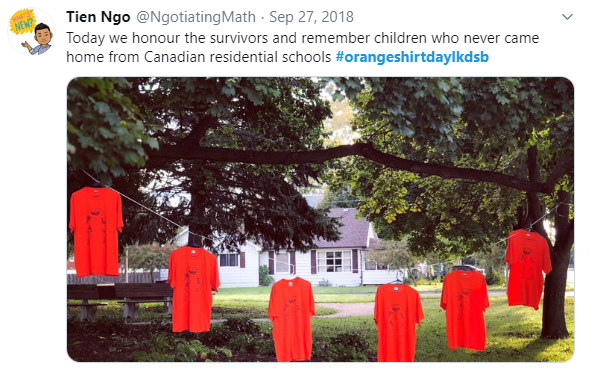
Orange Shirt Day is a day when we honour the Indigenous children who were sent to residential schools in Canada.  We honour the survivours and the memory and lives of the children that didn’t make it home. The days surrounding Orange Shirt Day are an important time to learn more about the history of these schools and the effects that are still being felt today.  


To ensure students understand why we honour Orange Shirt Day, teaching and learning about the history of residential schools and the effects that are still being felt today should be happening in the days and weeks prior to September 30th.


LKDSB Hashtag: 
We are asking schools to share what they are doing prior to and during Orange Shirt Day by using the following hashtag: #OrangeShirtDayLKDSB . The four First Nation communities (Aamjiwnaang, Bkejwanong, Eelunaapeewi Lahkeewitt and Kikonong Miinwaa Aazhoodenong) that are connected directly to our board have asked specifically to be made aware of what is happening in schools. Posting through social media allows us to communicate this to community partners in a very timely manner. We will also collate your tweets to present this information to the LKDSB Indigenous Liaison Committee. 


Here are some examples of ways schools in the LKDSB honoured Orange Shirt Day last year.  


Remember, it is important that understanding is built BEFORE Orange Shirt Day.  Here are some resources to help you build that understanding. 


Resources


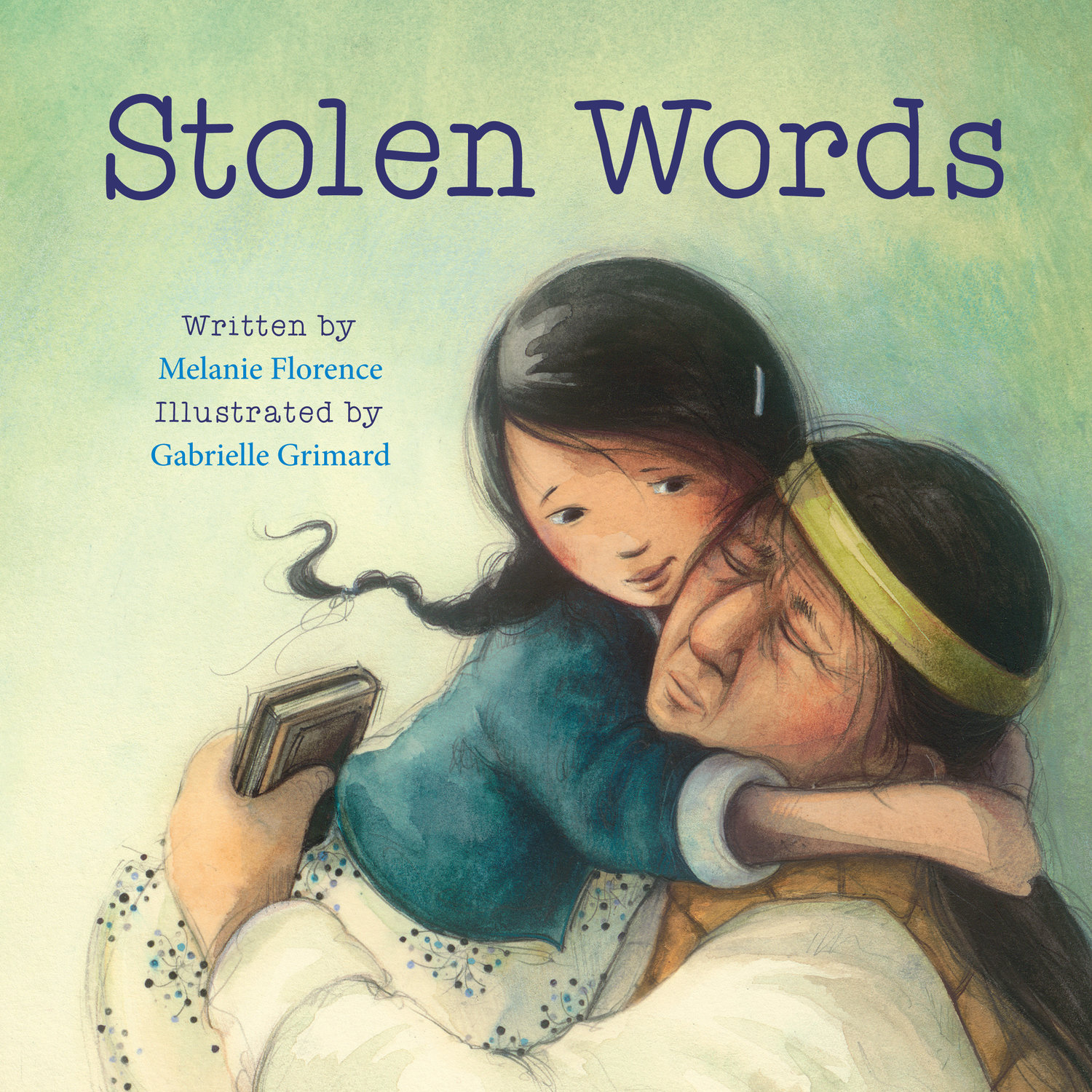
Books


It has been brought to our attention that the Epic! app has quite a few books that are about residential schools.  A quick search brings up many titles. 


The Orange Shirt Story by Phylis Webstadt 

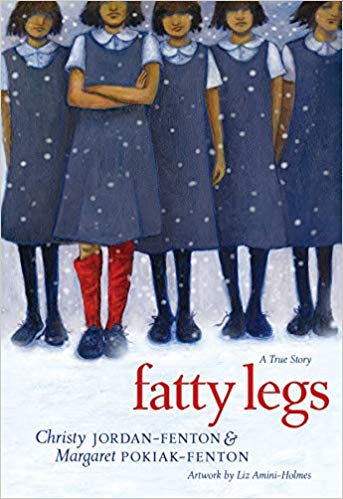
Fatty Legs by Christy Jordan-Fenton and Margaret Pokiak-Fenton
Teacher resource: (junior/intermediate) http://empoweringthespirit.ca/fatty-legs-webinar-series/ 

Shi-Shi Etko by Nicola I Campbell


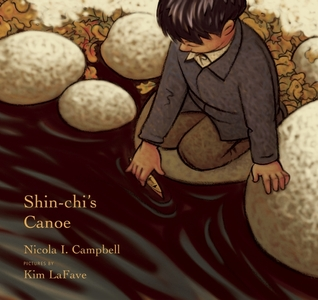
Shin-Chi’s Canoe by Nicola I Campbell


I Am Not a Number by Jenny K. Dupuis 


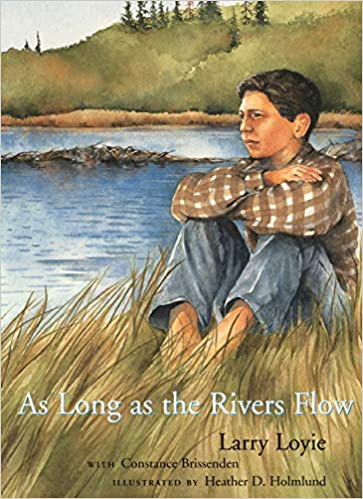
As Long as the Rivers Flow by Larry Loyie


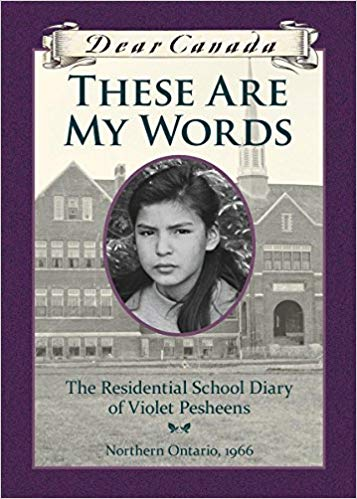
These are My Words: The Residential School Diary of Violet Pesheens
Novel by Ruby Slipperjack


Websites


What is Orange Shirt Day?  CBC Kids

This link is from the Truth and Reconciliation Commission.  It has lots of information and resources to use in your classrooms. 


Legacy of Hope: Where are the Children is a comprehensive site with links to resources to download and a large survivor story library.  There is also an app that has a lot of stories, photos and maps. You can find it in the app store (search for: Legacy of Hope: Where are the Children)
http://wherearethechildren.ca/en/ 


Deepening Knowledge from the Ontario Institute for Studies in Education.  
This has lots of great links. 


The Inuit experiences of residential school.  This website has lots of photos and resources.

 PDF About Misconceptions of the Residential Schools System (From Aboriginal Healing Foundation).  This is a really powerful document.  
  
Link to Map/List of 139 Residential Schools.  


Although it is important to create awareness and understanding around Orange Shirt Day, please remember this is a conversation that can happen any time during the school year. 


Miigwech!


Gretchen


How to Zoom

Not familiar with Zoom?

Zoom is our video conferencing platform for digital learning.

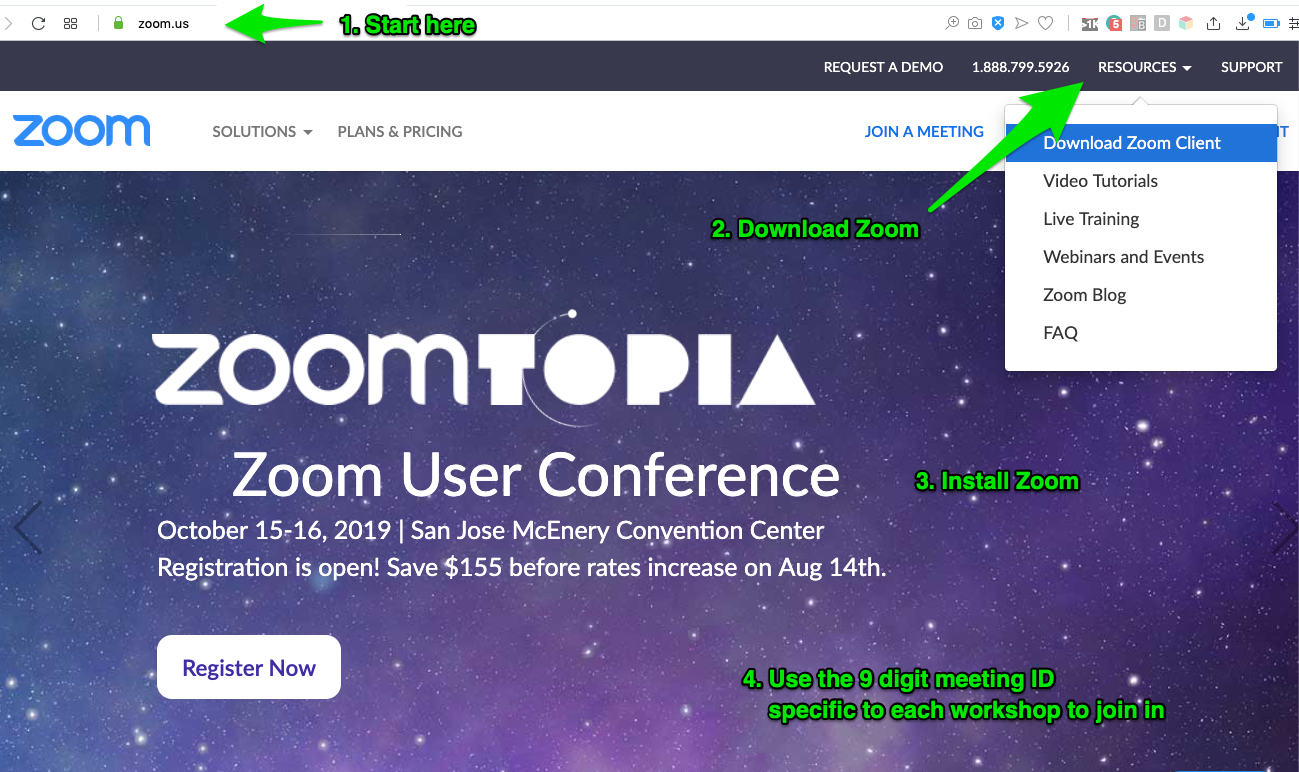
Watch this short YouTube demo with instructions for joining a Zoom meeting.Zoom is compatible with almost all devices and platforms.  If you’d like, you can download the Zoom application (free), and use the meeting ID to join in any workshop.  Get started at zoom.us


Ready to give it a try?   


Tip #1: 

If you have never used Zoom before, it’s a good idea to test your connection before the workshop.

Tip #2: 

Use a headset with microphone if you’d like to join the conversation

Join in

Option #1 To join a conference, just click a workshop link and Zoom will download/launch.

Option #2 Paste the link into your favourite web browser… and click ‘start from browser’.

Option #3 Dial into any workshop by telephone:

+1 647 558 0588 Canada
Take note of the Meeting ID for the workshop you’d like to attend.
If joining from outside of Canada, find your local number: https://zoom.us/u/abmHUnS1xt

Monday, June 24, 2019

Where to Next? Launch 2019 (A digital conference)


Where to Next? Launch 19 (A digital conference)

August 19 - 23, there will be some great professional learning taking place for educators.  We will be 'launching learning' in an online format.

Each session will be a 30 - 45 minute sessions, followed by optional follow-up discussions.  You will be able to just click and join from anywhere (your backyard, breakfast table, or poolside).

Sign up for as many or few as you'd like.  Sign up here: https://forms.gle/rT9L39PTU1Kebza5A

Here is the schedule:


Mon.
August 19
Tues.
August 20
Wed.
August 21
Thurs.
August 22
Fri.
August 23
9:00-9:45
Gretchen and Pam:
Truth and Reconciliation: What We are Learning and What's Next
Gretchen and Pam:
Sharing and Appreciating First Nation, Metis and Inuit Perspectives:
Cultural Appropriation VS Appreciation
Nicole & Jenn (Pam)
Meeting Curriculum Expectations & Assessment in the Learning Commons
Stef and Teresa: Supporting ELL students in the classroom:  Common questions.
Myria
FSL:
Building a Positive Learning Environment à la Carte
10:00-10:45
Sally
Flexible Seating:  Is it Right For You and Your Students
Sam & Alicia
Student Voice in the Math Class: Why?

Sam & Alicia
Student Voice in the Math Class: How?
Tien & Kate
Intentional Talk in the Math Class: Activities to Build Powerful Number Sense
Sally
Multiplication: I Know Where They Are, What Do I Do Now?

Sign up here: https://forms.gle/rT9L39PTU1Kebza5A

All the information is here: https://tinyurl.com/LKLaunch19


Follow along on Twitter at #LKLaunch19


Wednesday, June 19, 2019

Rethinking Field Trips Building Indigenous Understanding


Why Visit a Local First Nation?

Many students and teachers in our school board can tell you that they’ve never visited a First Nation Community. Kettle and Stony Point, Aamjiwnaang, Bkejwanong or Delaware Nation are communities that are only a short drive down the road. These Communities are home and a place of work to many First Nations people and they are rich in history with strong connections to the land.

We need to make an effort to spend time in local First Nation communities because we are unconsciously sending the message that there is more value in taking a field trip to a water park or a zoo than there is in learning from local First Nation community members in their communities. We need to shift that thinking and show our students and their families that there is value in going out to a First Nation and forming relationships with community members.  Students often come to our schools with stereotypes formed. It gets very hard to hold onto those stereotypes when students are out in First Nation communities forming relationships with and learning from First Nation community members.

Rethinking Your Field Trips

I have been in conversation with teachers about how to use field trips as a way for students to experience Indigenous worldviews and ways of knowing.  Many teachers are interested in outdoor education and are looking for experiences that get their kids out of the classroom and onto the land.
Through planning with community partners from First Nations in the area, some teachers are taking their classes really great year end field trips.

Experiential Learning at Bkejwanong

During the months of April, May and June, Matt Sanders (Experiential Learning Coordinator), the LKDSB Indigenous Education team and First Nation partners from Bkejwanong have brought over 500 students from across the south end of the LKDSB out to Bkejwanong for some outdoor experiential learning experiences. 
Students met at Highbanks Park to have a learning experience like no other.
I have compiled some photos to share what the students and teachers learned about.


With Montana Riley from the Heritage Centre, students were able to learn about the history of Bkejwanong, and what the word “Bkejwanong” means.


Students and teachers were able to sit together in the Teaching Lodge in Highbanks Park and hear stories told by Esbikenh and Bryson Kewayosh.  Students also learned about treaties and why they are so important to the country of Canada and the Indigenous people of this land.


Laban Smith taught the students how to etch in birch bark.


Dallas Sinopole taught the students about the history and teachings of the game of lacrosse.


Cedric and Leighann Isaac taught the students about drumming and songs.  Students were able to play shakers and sing along as well.


Minogiizhgad shared knowledge about the land of Bkejwanong with the students. He talked about history and traditions and taking care of the plants and animals.


Students were able to try archery, led by Adrian Murphy from the Bkejwanong Youth Facility.


Students were able to learn about the importance of taking care of the water with Christine Whiteye.


Rocky Sands taught the students about his life as a hunter and trapper and demonstrated how to skin a muskrat.


Summer Garcia and Julia Miskokomon taught the students how to use phragmites (an invasive species) to weave a large mat that will later be used for food drying.


It was cold, wet and very, very muddy on some of the days.  The students had to ensure that they came to school dressed appropriately, and sometimes they weren’t.  When the students came out for their second day of learning, they were sure to dress appropriately. I even saw a student who brought bags to put over her shoes to keep them clean and dry!


Where to Next?
It is important for teachers to remember a few things when we are leaving the classroom and visiting a community or a First Nation:
• Be respectful.  You and your students are visitors in someone else’s home, and you are representatives from your school
• Be flexible.  Things do not always go exactly as planned, but that’s okay!  That’s what experiential education is often about!
• Ask lots of questions! Through conversation, we can get to know even more.
• Use the opportunity to try new things!  Encourage your students to be adventurous and maybe taste a new food or learn a new skill.
• Learn the names of the people who are leading the learning or presenting.  It’s so important to build relationships with local First Nation partners. This is a relationship that can be nurtured and could lead to future learning experiences for you and your students.

Getting out on the land to learn is something that not everyone is comfortable with.  There are a lot of unknowns, but there are so many new and wonderful learning opportunities that can occur. We as teachers need to realize that there are so many really great experiences that are a just a short bus ride away.  Sometimes it’s just a 20 minute bus ride down the road that will provide students with a unique experience that shows them the value of Indigenous knowledge, and it can also demonstrate to students that there’s so much to learn outside of the classroom!