Showing posts with label treaty week. Show all posts

Monday, November 2, 2020

Treaties Recognition Week


Treaties Recognition Week was introduced in 2016 to honour the importance of treaties and to educate Canadian citizens about treaty rights and treaty relationships.


This is the time that teachers and students learn about treaties and build greater understanding of the importance of treaties in Ontario, and Canada. Treaties negotiated in this country are the foundation of the relationship between governments and Indigenous peoples and also the foundation of Canada. 


Treaties Recognition Week responds to the Truth and Reconciliation Commission’s Calls to Action to increase treaty awareness.  This helps create equitable and respectful relationships, enabling a better way forward together.

We have created these videos for you to use to build your own understanding of the importance of treaties, and also to share with your students.  You can use these videos to start the conversation and generate questions for inquiry. 

  • Dallas Sinopole’s introduction: 

  • In this video Dallas talks about the wampum beads that the belts are made of: 

  • This video tells of the Dish with One Spoon Treaty: 


*Make sure to turn the Youtube Closed Captions on in the following videos.  Captions were not included in the original video.

  • This Video tells of the Two Row Wampum: 

  • This Video Tells of the Treaty of Niagara: 

  • This Video tells of the story of The Drum, and how treaties are not always recorded through wampum or pen and paper: 

  • This video tells how the game of lacrosse is also viewed as a way to keep peace, much like a treaty: 

  • In this video Dallas talks about how everyone living in Canada is a treaty person and has rights and responsibilities that come along with these treaties: 

  • In this video Dallas talks about treaty rights today: 


More Resources to support learning about Treaties: 



Links

Just a reminder:  The LKDSB has a license for the (First Nation, Metis, Inuit Education Associaiton of Ontario (FNMIEAO) resources.  The password was emailed to you, but if you need the password resent, send an email to Gretchen Sands-Gamble

If you are interested in building your own understanding of treaties and how they are important to all Canadians and the land upon which we live, the FNMIEAO is offering free treaty education webinars starting on October 26th.  

Register here: 

https://docs.google.com/forms/d/e/1FAIpQLSfvF_8OM54FavY7cjblfAc1t7VGZecfDBwsZtm2xP6CT7DBNQ/viewform


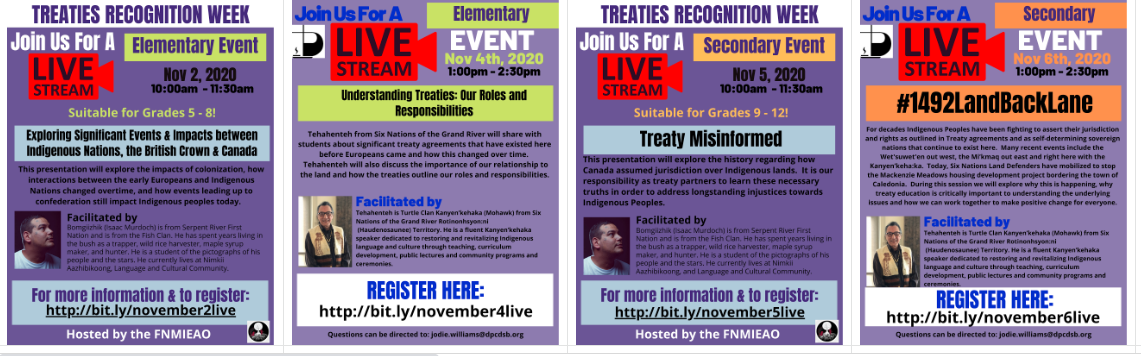
Live Webinars provided by FNMIEAO

5 different webinars for all grades! 

For more information and to register, click on the picture


This is an awesome list of resources provided by FNMIEAO


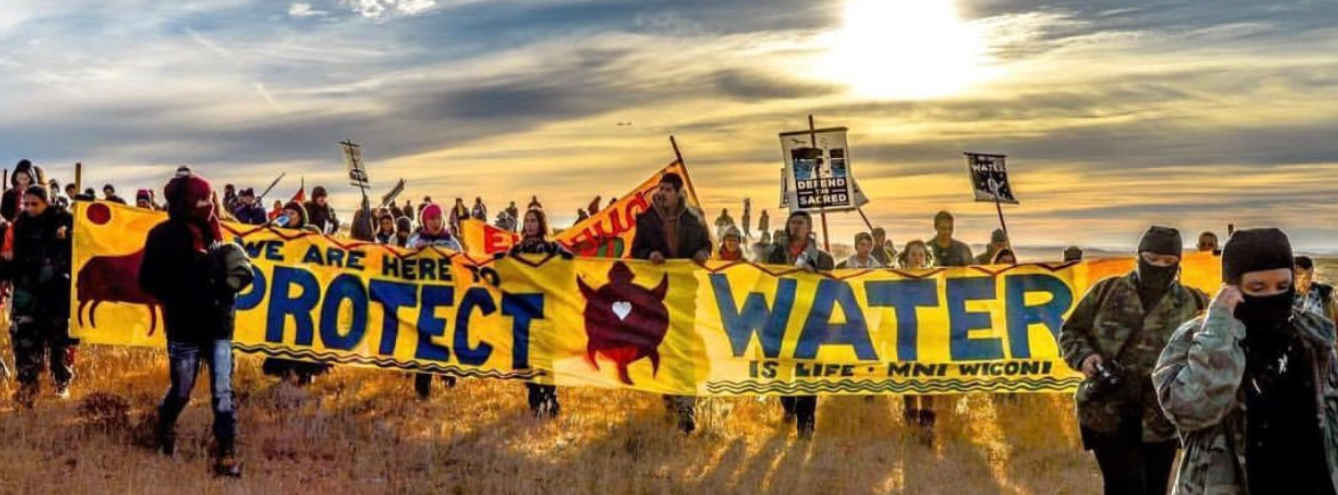
This is an amazing resource curated by Jodie Williams from the Dufferin/Peel Cathoic School Board.  It shares many great articles, videos and stories of the current fight by Indigenous peoples to maintain their treaty rights across Canada.  By learning more about treaties and the rights that come with them, all people can understand why Indigenous people are fighting for these rights.

Another great resource by Jodie Williams:

A bitmoji classroom that contains videos to support treaty learning. Just click the link and make a copy.

This is great for virtual and face to face classrooms!

https://docs.google.com/presentation/d/1ZQohkvG5VMu28AwQQLgbGJKkunkSgeGbenHI4ahrITw/copy


The First Nation, Metis, Inuit Education Association of Ontario created this document: Pedagogical Considerations for Treaty Education.  It contains information and many more links to support your own learning about as well as the teaching of treaties. 

https://drive.google.com/file/d/1B7T1GvG5HkjJkFItqFBXIjbOzQ_AtXj-/view

These are the blog posts I have created in the past about treaties.  These include lots of links, videos, articles and lesson ideas.

This issue of Kayak magazine is all about treaties.


Where to next? 

After watching these videos and learning about The Two Row Wampum or the Dish With one Spoon Wampum, ask yourself and your students how this relates to our Traditional Territory Acknowledgement.  

Revisit this blog post Making The Traditional Territory Acknowledgement More Meaningful.  Use the information provided in this video to encourage your students to create a more meaningful Territory Acknowledgement that speaks of treaties, speaks of relationships with the land, speaks of the people whose traditional territory you are on and includes a commitment to these peoples and the land.  

If you have any questions or have student work you’d like to share, please email me at: 

gretchen.sands-gamble@lkdsb.net

Or on twitter:  @msGambleLKDSB


Wednesday, February 27, 2019

More on Land Acknowledgements


A territorial or land acknowledgment is an act of reconciliation that involves making a statement recognizing the traditional territory of the Indigenous people who called the land home before the arrival of settlers, and in many cases, still, do call it home.

Over the past few months, many conversations have arisen on social media and in the news around the land acknowledgments that are given in schools and other public places. How can we make sure that the acknowledgments are a meaningful practice rather than just a token gesture?

I see the land acknowledgment as a recurring opportunity to learn. As teachers, we can act on this learning opportunity and help to fulfill education’s responsibilities outlined in the TRC calls to action. You can read all 94 calls to action HERE.

I always encourage teachers to use the land acknowledgment that is recited each day in our schools as a learning tool or a conversation starter. Students and teachers and the rest of the school community should understand why we say them.

If you’re wondering why we say Land Acknowledgements in our schools please refer back to my blog post from November. You can find it here: Why the Land Acknowledgement is Important


Where to next?

Jen Gilpin, a teacher at PE McGibbon has created land acknowledgement videos that include the treaty area where her school is located. She has made sure to include visuals that are relevant and meaningful to the land and the people of Treaty 29 (Also known as the Huron Tract). These videos are played daily as part of PE McGibbon’s announcements, prior to signing O Canada. They can spark conversations in Social Studies around mapping, treaties and the history of the areas in which we live. Please feel free to use these videos in your classroom or your school.


Sarnia Area and North Lambton Area schools are within the Treaty 29 area. I am inviting teachers and their classes to create their own videos for the treaty area in which their school is found. Please share these videos with me (gretchen.sands-gamble@lkdsb.com) or tag me on Twitter @msgambleLKDSB) so I can share them with other teachers who may be interested in using them!

You may be asking, “In which treaty area can my school be found?” I’m glad you asked!

Teachers can use the map at https://native-land.ca/ to find out more about the area in which their school is located.

You can also use this interactive map in your classroom! Show your students the map found at https://native-land.ca/ You can change what is displayed by choosing language, territories, and treaties. Show them where their school is located. Ask your students what they notice about where the lines are drawn on the map.


(from https://native-land.ca/)

CBC Unreserved recently aired a podcast called “Redrawing the Lines” You can find the episode here: CBC Unreserved: Redrawing the Lines

This is a great episode that talks about land, land acknowledgments and maps.

Sharing podcasts created by Indigenous people is a great way to share Indigenous perspectives with your students.

I highly recommend Unreserved as a podcast for deepening your own (teacher) understanding of many issues that are important to Indigenous people. With each episode, some really great stories are shared and the conversations often provide views from multiple perspectives along with an opportunity to learn. In fact, there is a recent episode all about integrating Indigenous content into classrooms. It can be found here: CBC Unreserved Indigenous Education Episode

It is important for all students and teachers to understand that hundreds of years before today, the land looked very different. The places we call our schools, our homes, our recreation areas, our business/economic areas, and our natural resource areas have been impacted by treaties.

School communities should understand that the treaties with the Indigenous people who called this land their traditional territory have allowed the landscape and who inhabits this land to change drastically. This might be a conversation that is difficult or messy, but it is a conversation that needs to be had in order for our students to truly understand Canada and its history.

Friday, December 14, 2018

Introducing Treaties to Primary Students

Children are never too young to learn about treaties and their significance.  In primary grades we can introduce students to the importance of agreements or promises, discuss how these agreements come about and the implications of breaking them.  If we start the discussion by exploring what these ‘treaties’ or promises look like through their eyes, we can begin to deepen their understanding of their significance.

Use a simple text to provoke conversation among students in order to develop a broader understanding.  For example, teachers could use the videos provided here as a starting point.

English:


French:


Teachers could also use mentor texts as the conversation starter.  


English
French
A Promise is a Promise  Robert Munsch
Turtles Race with Beaver Joseph Bruchac
Racoon’s Last Race Joseph Bruchac
Franklin’s Promise
Une promesse c’est une promesse      Robert Munsch


After watching the video or reading a book, you could ask students questions such as:


English
French
  • What types of agreements or promises do you make?
  • Who did you make those agreements with or promises to?
  • How did the agreement come to be?
  • Can you think of a written agreement that you have been a part of?  (i.e. class agreements)
  • What happens when that promise is kept?
  • What happens when you don’t keep that agreement or promise?
  • Quelles promesses faites-vous?
  • À qui les faites-vous?
  • Comment est-ce que l’accord devient?
  • Est-ce que tu peux penser d’un accord écrit duquel tu faisais partie?
  • Qu’arrive-t-il lorsque vous tenez votre promesse?
  • Qu’arrive-t-il lorsque vous ne la tenez pas?

Where to Next?
Create a promise together as a class.  This could be a promise to treat everyone nicely at school or a promise to pick up litter and take care of the Earth.  Whatever the agreement, discuss its importance with the students and how that agreement will be upheld. 


Friday, November 2, 2018

Classroom Resources for Treaty Week

It should be acknowledged that many of us are starting at varying entry points regarding our knowledge of the history of treaties in Canada and the treaty relationships between Indigenous People and the settlers of this country. I encourage all educators who teach in our schools to learn along with their students. This is an important aspect of Canada, and the treaties signed in what has become known as Canada have shaped this country and it would not exist as it does if it were not for treaties. 

To deepen your own learning and understanding of treaties this is a magazine with many great articles about treaties, treaty relationship and what our next steps are as treaty people in Canada.

https://www.canadashistory.ca/CNHS/media/CNHS/cnhs-media/PDFs%20and%20Powerpoints/EN/CHDig2018Treaties.pdf


Classroom Resources for Treaty Week

This resource is for teachers to use in the classroom. Your students can open this on their iPads to learn more about the history of treaties in Canada.

http://education.historicacanada.ca/files/104/Treaties_Printable_Pages.pdf

A great exercise is to relate the daily land acknowledgement (see an earlier blog post for the land acknowledgement video) to the treaties in the area. This website includes a map that shows you who traditionally lived on the land where you gather, work and live.

https://native-land.ca

It includes a teacher’s guide and more information for you to use in your class.

This map includes the treaties that are local to our area. You can use it as a starting point to learn more about each treaty.


From: www.walpoleisland.ca

This link takes you to a PDF map that shows all of the treaties in Ontario by name and/or number as well as the First Nations in Ontario. Students can use this map to see what treaties are found in their area and then do research to learn more about that specific treaty. By living on treaty land in Canada, everyone is exercising their treaty rights. What treaties have benefitted you and your students? How have they benefitted your school population?

https://files.ontario.ca/treaties_map_english.pdf

The Edugains website has some resources (lesson plans, links, videos) addressing First Nations, Metis and Inuit education. If you go to the following link, click on the "Resources" link. It will take you to lots of great resources.

http://www.edugains.ca/newsite/curriculum/elementaryresources/socialstudies.html

This is a great PDF magazine for kids that is all about treaties and treaty relationships.

https://www.canadashistory.ca/getmedia/e491995f-0d3a-44a0-aa74-04d22901308c/Kay2018Treaties.pdf.aspx?utm_source=Canada%27s+History+Newsletter&utm_campaign=513078266d-TCHeSept2018KayakTreatyIssue&utm_medium=email&utm_term=0_8145df6f6e-513078266d-284528137

A great picture book to use when learning about treaties is Hiawatha and the Peacemaker by Robbie Robertson. It is a story that is centuries old and tells of the Great Law of Peace and the Haudenosaunee.


Baamaapii Ngowaabmin


Understanding the Spirit and Intent of Treaties


Understanding the spirit and intent of treaties:
When treaties were traditionally signed between sovereign Indigenous Nations there was a spirit of relationship between the two groups. When treaties were signed between the European settlers and the Indigenous people the two groups both had expectations that differed. The Indigenous People viewed the treaties as more of a covenant than a contract.

Contract/Covenant: What’s the difference?
As a covenant, a treaty was seen as being based on good faith and good will, while a contract is meant to be negotiated and in search of the best deal. Contracts are based on written text and oral agreements while a covenant honours the spirit of the agreement. The Indigenous people viewed the treaties as a sacred commitment for both parties involved and recognized the spirit and intent as most important. This commitment was traditionally finalized by a sacred ceremony.

When reading about treaties, it is important to find accurate information on the intent of the original treaty as understood by the Indigenous community signing it. One of the sample questions from the SS/HG curriculum document is, “Why is it important to find accurate information on the intent of the original treaty as understood by the Indigenous community signing it? Why might there be differing interpretations of a treaty?”. It is important that teachers and students understand that there was a differing of views, and to keep in mind who’s voice is being represented in your research.

Treaty with Chippewas of Walpole Island 1857

"Fawn Island" Which was called, Keshebahahnelegoo Manesha 


Expectations vs. Reality
The expectations that the Indigenous People had regarding the treaties and what they actually received from the treaties differed very greatly. While they expected education, what they got was residential school. They expected health care in times of sickness, but they were given an Indian Agent who controlled the medicines and medical attention that was received. They expected to have their way of life protected but were given farming implements and hunting and fishing rights on reserve (All of which were again, heavily controlled by the Indian Agent). They had expectations of land sharing and in reality, were give small tracts of reserve land that were held in trust by the Crown.

This is a snapshot from a Treaties and Reserves map found here: https://files.ontario.ca/treaties_map_english.pdf

It shows the treaties and the First Nations in our area. The First Nations are in the maroon areas.


When reading this map, consider the differences between land sharing and land ownership. Compare the words stewardship and dominion. How do these words and phrases differ? Have your students discuss these differences in relation to what the expectations of the Indigenous people when signing treaties and what actually received. What could or should have been done differently in the past? How are we all, as Canadians affected by these treaties?


Treaties: Not just a piece of paper
In this video Janet MacBeth, Project Review Coordinator from the Bkejwanong Heritage Centre explains the importance of taking the spirit of the treaties into account. She reminds us that a treaty is more than a piece of paper, it is a recording of a living agreement that has many important aspects that go beyond signing the paper. 


Where to next?
Discuss agreements that you make in your classroom and the responsibilities that arise because of these agreements. Ask your students to think about what if these agreements are interpreted differently by varying people in the classroom? How can we relate this to the treaties that were signed by settlers and the Indigenous People? Write agreements with each other and ensure the spirit and intent of your treaties are recognized and respected.

Baamaapii Ngowaabmin!

Thursday, November 1, 2018

What is Treaty Week?

As we are leading up to Treaty Week many teachers are looking for resources to support students learning.  At this time we would like to acknowledge that many of us have learning to do around this topic, and we need to address this learning so we can move forward.

During this week we encourage students and teachers to learn, wonder and ask questions about treaties, treaty relationships and how treaties have shaped Canada as a nation.

“What is Treaty Week?”  Treaty Recognition Week occurs in the first week in November and was first introduced in 2016.  It was created to bring attention to the importance of Treaties and to help people from Ontario learn more about treaty rights and treaty relationships.

The Canadian Encyclopedia tells us :
"Indigenous treaties in Canada are constitutionally recognized agreements between the Crown and Indigenous peoples. Most of these agreements describe exchanges where Indigenous nations agree to share some of their interests in their ancestral lands in return for various payments and promises. On a deeper level, treaties are sometimes understood, particularly by Indigenous people, as sacred covenants between nations that establish a relationship between those for whom Canada is an ancient homeland and those whose family roots lie in other countries. Treaties, therefore, form the constitutional and moral basis of an alliance between Indigenous peoples and Canada."
From  

You may have seen a Wampum Belt and connect that with treaties between settlers and Indigenous people.  In Canada, it has been well documented that treaties took place between Nations hundreds of years before European contact.  Many of these agreements were documented using wampum belts and are still alive today.
Wampum belts are one example of the way that Haudenosaunee, Anishinaabe and other Woodlands Nation’s history and culture is tied to oral tradition. For each wampum belt, there’s a certain set of promises that an assigned Carrier of the belt memorizes, and recites at the appropriate times. The design, and even the number of beads, acts as a mnemonic device, much like the picture-writing on the birch bark scrolls. The wampum keeper would hold the belt and read it by sight and touch and memory. The oral tradition of the wampum belts is a formal, highly allegorical diplomatic language.
-Ojibwe Cultural Foundation 2011

This video explains the significance of the wampum belts.


This video explains the traditional meaning of treaties:


After watching this video this may be a prompt you pose this to your class:
Notice the language the elder uses,
 “..It was to create a relationship where you worked in harmony and consulted with each other at what would work best for all nations, not just one or the other”.

 What do you think this means?
 Is this spirit of relationship and harmony reflected with the later treaties with the settlers?


Where to next?  
The internet has many photos of Wampum Belts, and the Treaty Kit that each school was given in 2017 includes lots of information.  Use this kit to help start your inquiry and research into what it means to be treaty people.

This infographic can be a great tool to start the inquiry process around treaties.  What questions do you come up with as you read this infographic?

English version: https://www.aadnc-aandc.gc.ca/eng/1380223988016/1380224163492


French version: https://www.aadnc-aandc.gc.ca/DAM/DAM-INTER-HQ-AL/STAGING/texte-text/treatyMaking-infopic-pdf_1380133996417_fra.pdf


The revised Social Studies/History and Geography Curriculum document has many great sample questions to guide you and your students on learning more about treaties in Canada.


Stay tuned for more resources for your own learning and understanding of treaties and treaty relationships in Canada, as well as resources for your classroom!

Baamaapii Ngowaabmin!