To support the development of a student's reading, teachers often use a standardized assessment (like DRA) to learn more about the student's strengths and the reading behaviors and understandings that require more support.
NEW
The Benchmark Assessment System will be available as an assessment tool for LKDSB teachers in the Fall of 2021. Teachers will be able to choose the tool for reading assessments. (DRA or Benchmark)
Benchmark Assessments are administered as one-to-one, student-teacher reading assessment conferences.
There are three components to the Benchmark Reading Assessment
Oral Reading,
Comprehension Conversation, and
optional Writing about Reading task.
The process is repeated until the teacher determines the text levels the are independent, instructional, and hard for the student. (Fountas and Pinnell Text Levels)
In addition to determining the text levels, the teacher will learn about the student's Thinking Within the Text, Thinking Beyond the Text, and Thinking About the Text.
The Fountas and Pinnell Literacy Continuum, found in the Benchmark Kits, is an excellent resource for planning, teaching, and determining a student's next steps.
"Behaviors and Understandings to Notice, Teach, and Support"
Check you are assigned the correct subjects for report cards and that the students in the subject course sections are correct. If there are any issues, please contact the secretary for resolution.
The Arts: LKDSB Teachers Sharing Ideas and Resources
LKDSB teachers Lisa Rankin, Dresden, Allison Millar, Sir John Moore, and Alicia Wyville, East Lambton share ideas and resources they have been using in their Visual Arts, Drama, Music, and Dance classes across the grades.
They have adapted classroom activities to keep students, moving, creating, and analyzing in classrooms while following COVID 19 Protocols.
Creating, performing, exploring, and responding to are ways students experience music, drama, dance and visual arts. With the current Health and Safety protocols in place, educators have responded and adapted to keep thelearning going for students!
Educators have expressed an interest in learning new ways to engage students in music experiences. Members of the Ontario Music Educators Associationwere invited to LKDSB to lead a series of virtual learning sessions.
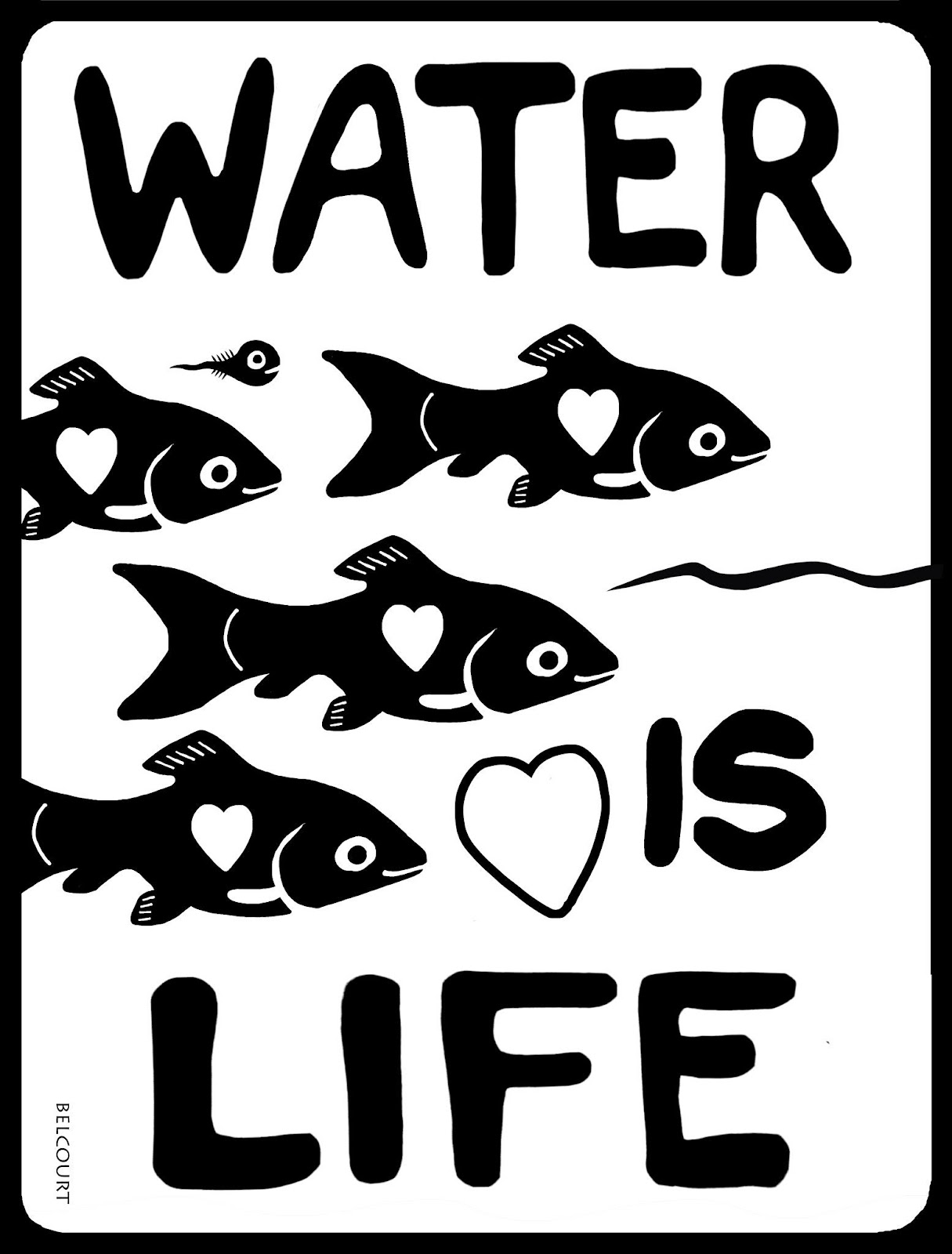
Did you know that March 22nd is World Water Day? This day is about sharing what water means to people all over the world.
In Canada and all over North America, Indigenous people are leading the fight to protect the water from pollution. They are also fighting for access to clean water in their communities; something that many of us take for granted.
Have you had this conversation with your students?
Reading together these beautiful and informative books, found in all LKDSB schools, are a way to introduce and share the stories of water protectors.
After reading the books The Water Walker and We are Water Protectors, consider making connections to the Visual Arts curriculum by taking a look at the artworks of Christie Belcourt and Isaac Murdoch.
Extend the learning by encouraging students to creatively share their voice and perspective.
create videos,
audio recordings,
write songs,
make art pieces or
slide shows
Share it! Empower others to protect the water and to learn what people need to and can do to keep water safe and clean for all living things.
Learning about this activism and having conversations about water in Canada connects to the Science and Social Studies/ History/Geography curriculums.
These resources might help your students learn more.
Clean Drinking Water in First Nations
The issue of clean drinking water in First Nations has been in the news a lot in recent years. One of Justin Trudeau’s promises as Prime Minister was to have all drinking water issues in First Nations solved by 2021.
DISCLAIMER: This podcast has a bit of “mature language”.
Please listen to it first to decide if it is right for your students.
This is an awesome slideshow to accompany this podcast. It teaches about the history of Indigenous trade routes along the waterways, drinking water advisories,
This podcast can lead to so many awesome conventions and opportunities for exploring maps!
Use March 22nd, World Water Day as a jumping off point. Learning about water, water protectors, water issues in First Nations communities connects to many MANY areas of the curriculum. This learning can take place throughout the school year, not just around World Water Day.
Embedding these important stories in your Science, Social Studies, History and Geography, Language Arts and Math classes shows that Indigenous voices have value in all areas of the curriculum.
As always, please share what you and your students come up with! Tag me on twitter if you are sharing there: @MsGambleLKDSB or send me an email: gretchen.sands-Gamble@lkdsb.net