Creating, performing, exploring, and responding to are ways students experience music, drama, dance and visual arts. With the current Health and Safety protocols in place, educators have responded and adapted to keep thelearning going for students!
Educators have expressed an interest in learning new ways to engage students in music experiences. Members of the Ontario Music Educators Associationwere invited to LKDSB to lead a series of virtual learning sessions.
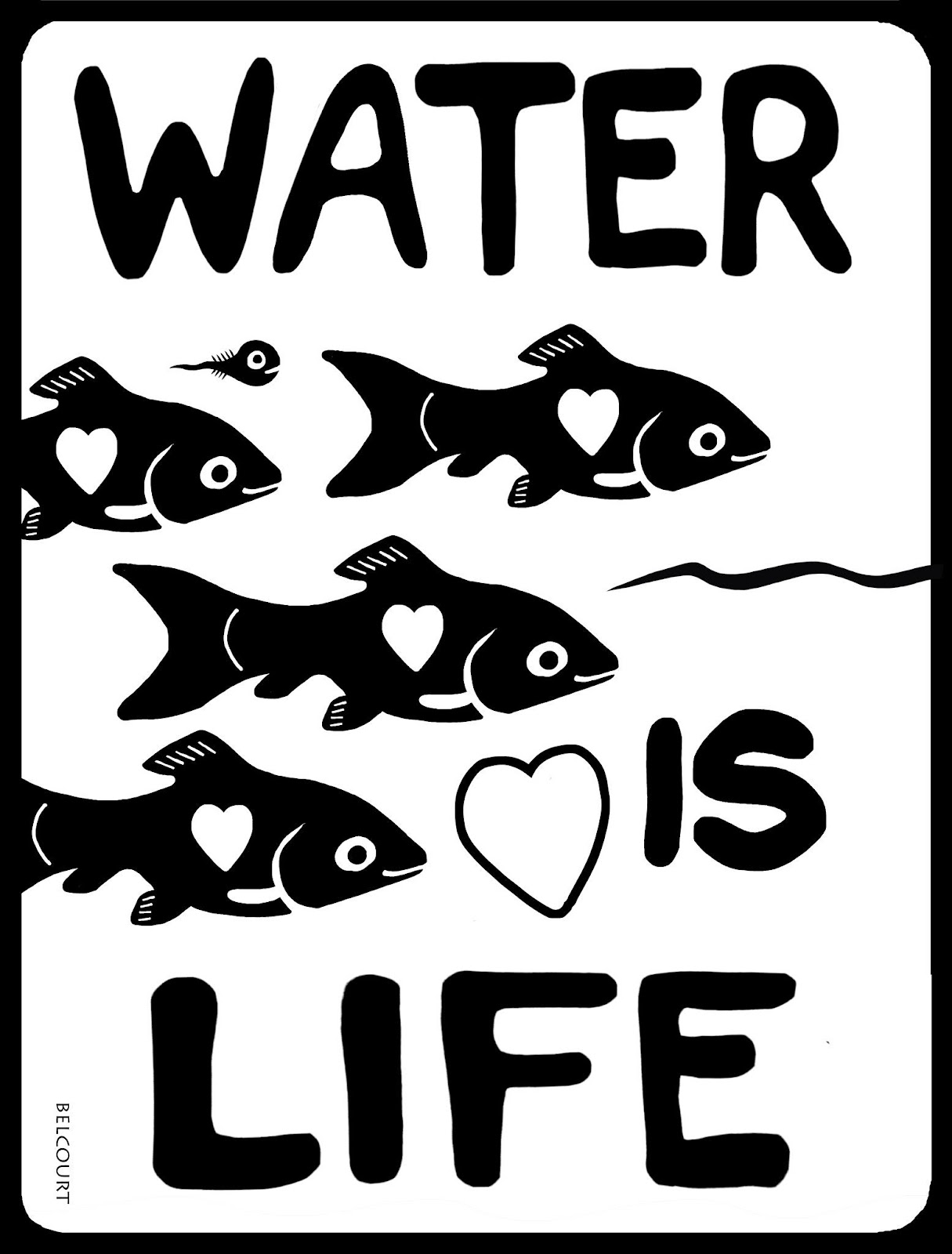
Did you know that March 22nd is World Water Day? This day is about sharing what water means to people all over the world.
In Canada and all over North America, Indigenous people are leading the fight to protect the water from pollution. They are also fighting for access to clean water in their communities; something that many of us take for granted.
Have you had this conversation with your students?
Reading together these beautiful and informative books, found in all LKDSB schools, are a way to introduce and share the stories of water protectors.
After reading the books The Water Walker and We are Water Protectors, consider making connections to the Visual Arts curriculum by taking a look at the artworks of Christie Belcourt and Isaac Murdoch.
Extend the learning by encouraging students to creatively share their voice and perspective.
create videos,
audio recordings,
write songs,
make art pieces or
slide shows
Share it! Empower others to protect the water and to learn what people need to and can do to keep water safe and clean for all living things.
Learning about this activism and having conversations about water in Canada connects to the Science and Social Studies/ History/Geography curriculums.
These resources might help your students learn more.
Clean Drinking Water in First Nations
The issue of clean drinking water in First Nations has been in the news a lot in recent years. One of Justin Trudeau’s promises as Prime Minister was to have all drinking water issues in First Nations solved by 2021.
DISCLAIMER: This podcast has a bit of “mature language”.
Please listen to it first to decide if it is right for your students.
This is an awesome slideshow to accompany this podcast. It teaches about the history of Indigenous trade routes along the waterways, drinking water advisories,
This podcast can lead to so many awesome conventions and opportunities for exploring maps!
Use March 22nd, World Water Day as a jumping off point. Learning about water, water protectors, water issues in First Nations communities connects to many MANY areas of the curriculum. This learning can take place throughout the school year, not just around World Water Day.
Embedding these important stories in your Science, Social Studies, History and Geography, Language Arts and Math classes shows that Indigenous voices have value in all areas of the curriculum.
As always, please share what you and your students come up with! Tag me on twitter if you are sharing there: @MsGambleLKDSB or send me an email: gretchen.sands-Gamble@lkdsb.net
Ongoing Support Sessions for Educators Monday – Thursday
Support will continue daily with LKDSB Program and Virtual School teachers sharing how to structure your remote learning classroom, key learning, and sharing helpful ideas.
It has been five years since the release of the Truth and Reconciliation report. We all can admit that we are at different points in our learning about the history of Canada’s relationships with Indigenous Peoples. In order to feel equipped to teach our students about this history and to feel more comfortable/enabled to have difficult conversations, we need to take steps to learn it ourselves.
There are many Ontario Social Studies curriculum expectations connections to the Indian Act, the time period surrounding the implementation of the Indian Act, as well as the acts that were in place before the Indian Act (The Gradual Civilization Act, 1857; and the Gradual Enfranchisement Act, 1869).
These resources will help you learn more about The Indian Act, and the effect it still has on Indigenous peoples today, as well as give you some tools to use to teach this part of history to your students.
What is the Indian Act?
This is an incredibly oppressive and racist statute of laws that was implemented in 1876 to force assimilation on First Nations peoples here in what we now call Canada. It is still in effect today, and although there have been some amendments, a lot of the laws still remain in The Indian Act’s original form.
The Indian Act governs every aspect of First Nations peoples lives and some of the pieces of the legislation include:
Forced First Nations peoples to live on small, leftover portions of land
Forced First Nations children to go to residential schools
Outlawed cultural practices such as ceremonies and celebrations
Removed the rights of First Nations women, made them dependents of their husbands (which was contrary to Indigenous customs)
Instituted the Reserve Pass System which made it illegal for First Nations people to leave their reserve without permission from the Indian Agent.
There are many, many more details to this oppressive piece of legislation about which, through guided inquiry, you and your students will be able to learn more, make connections to current events and then be called to take action.
Resources
Strengthen your own understanding
To learn more about The Indian Act, you can watch this recording of a Workshop that was provided to LKDSB employees on December 2nd. This workshop dove into the history of the Indian Act, and the details of some of its oppressive policies. Educators can use this recording to build their own understanding of the Indian Act and how it still affects the lives of First Nations peoples today. By taking the time to learn this information, you will be strengthening your own understanding and better equipping yourself to have difficult conversations with your students, families and friends.
Teach your students
I created a tool, Digital Evidence Box, for teachers to use with their Grade 7 and 8 students to teach about the Indian Act. You can find this resource here:
Using the Indian Act Digital Evidence Boxes in Your Classroom
This is a 20-minute recording about how you might use this tool in your class. Sample learning goals and success criteria are shared as well as ideas for other curriculum connections and possible assessment strategies.
French Immersion Considerations
It would be fantastic if any resources that share the true accurate histories and the voices and stories of Indigenous peoples would have been translated from their ancestral languages, but that is not the case. It is important to acknowledge at this time that through the oppressive realities of Canadian history, most First Nation, Metis and Inuit peoples do not speak the languages of their ancestors.
While these resources are exclusively in English, this resource can still be used in a French Immersion classroom. It has proven to be quite difficult to find Community and Primary resources in the French language, as most Indigenous people speak English. It is very important to note that for so long, Indigenous people’s voices were not shared or amplified, and it is very important for us as educators to make sure we are sharing and amplifying Indigenous voices through primary and community sources.
Some ways to use this resource in a French Immersion classroom:
Listen, read and watch the resources as they are in English and respond to them in French
Work with your teaching partner so these resources are used in an English Language Arts class
In Conclusion
By taking the time to teach about the Indian Act, you are helping students to understand the relationships between Canada and the Peoples indigenous to this land, as well as help your students to make connections to current events and issues. Many students (and teachers) come to school with biases in place, and also a lack of understanding of this history.
Through engaging in this teaching and learning a shift in thinking is able to take place and hopefully some empathy and understanding can be gained. Let’s work together to respond to and act on the Calls to Action of the Truth and Reconciliation Commission.